AVI KWA AME NATIONAL MONUMENT:
Seasonal Updates From Our Monthly Newsletters
Our monthly newsletters include seasonal updates—a chance to pause and reflect on the goings on in the monument. We love putting them together! Often the process of writing and reflecting reveals some new connection or detail worth seeing, and for those receiving the newsletter, it’s a brief window into the plants, animals and landscape that we care so deeply about. The best way to get these is right in your inbox by signing up for our monthly newsletter! It features upcoming events, Walking Box Ranch tours, hikes, drives and more updates from Avi Kwa Ame National Monument.
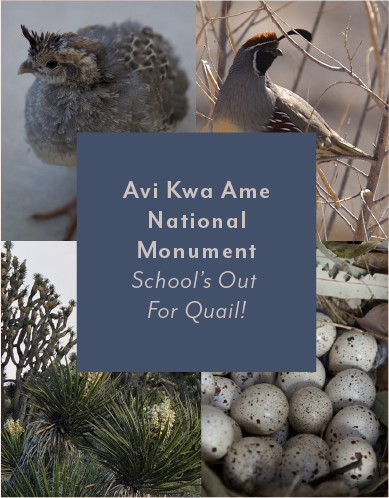
Avi Kwa Ame National Monument ~ School’s Out For Quail
JUNE 2026 - School’s out for quail! Their breeding season, which started in March, is wrapping up now in the month of June. Gambel’s quail are a special species local to Southern Nevada, as well as most of Arizona and parts of our adjacent states. They roost in dense brush and shrubs, and you’ll find them sitting in catclaw, yucca, and Joshua trees around the monument.
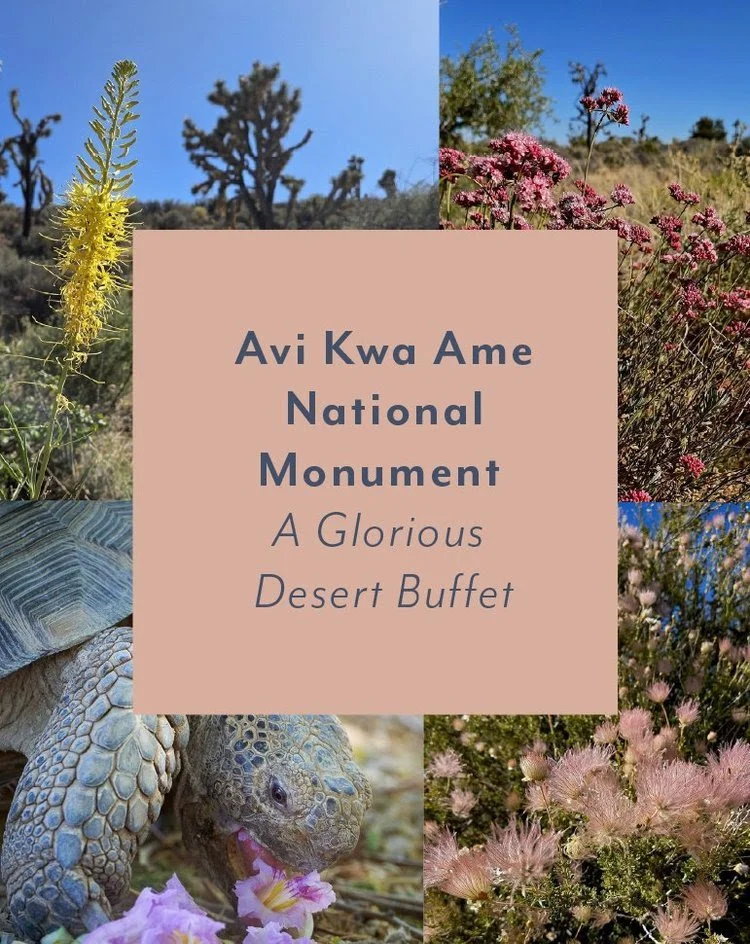
Avi Kwa Ame National Monument ~ A Glorious Desert Buffet
MAY 2026 - The winds are blowing our way in Avi Kwa Ame this spring, as our plants and animals continue to thrive due to this and last year’s rainfall. Late April and May bring bright, orange blooms to our cholla cactus, and fuzzy white seedballs on the creosote bushes that glow in the afternoon light.
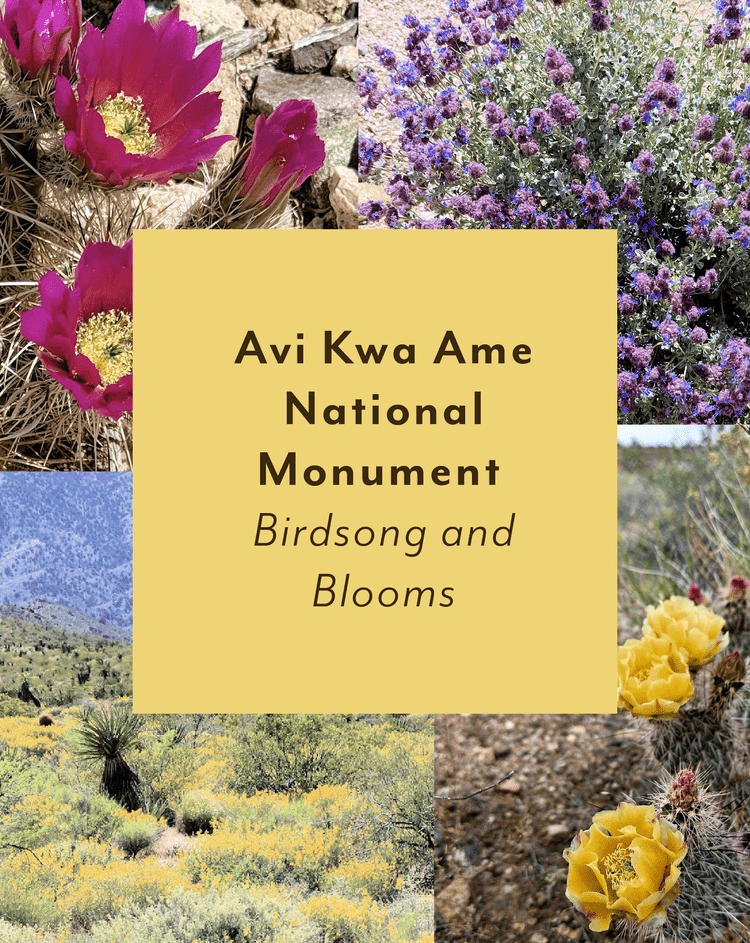
Avi Kwa Ame National Monument ~ Birdsong and Blooms
APRIL 2026 - Spring is here, and the air is humming with birdsongs, fly-overs and all kinds of bird nesting activities. Quail are marching their families about to forage while giving Marco-Polo type calls, and then resting in the afternoon shade of the blooming creosote bushes.
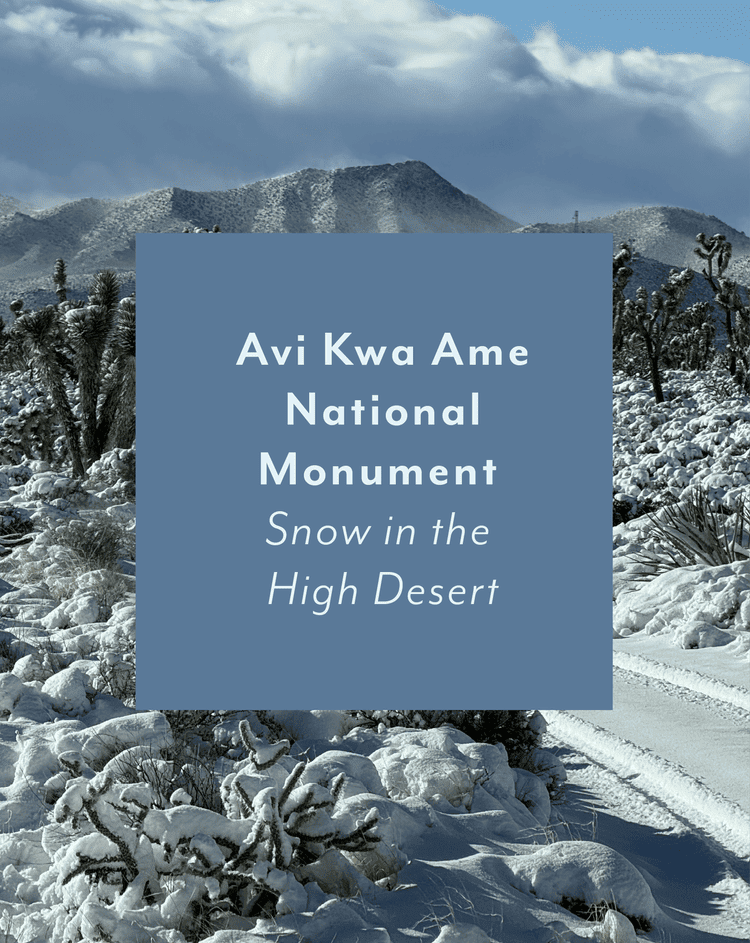
Avi Kwa Ame National Monument ~ Snow in the High Desert
APRIL 2026 - Spring is here, and the air is humming with birdsongs, fly-overs and all kinds of bird nesting activities. Quail are marching their families about to forage while giving Marco-Polo type calls, and then resting in the afternoon shade of the blooming creosote bushes.
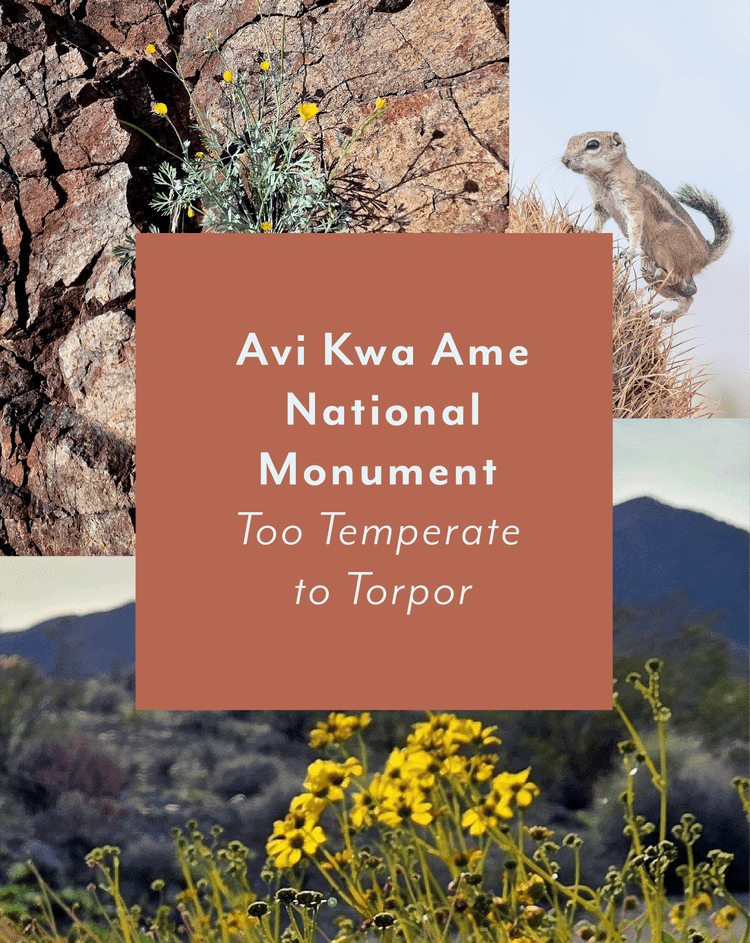
Avi Kwa Ame National Monument ~ Too Temperate to Torpor
FEBRUARY 2026 - To withstand the cold and conserve energy, white-tailed antelope squirrels (as well as some kangaroo rats and pack rats) can will themselves into a hibernation-like state called torpor, in which they slow down all their metabolic processes.
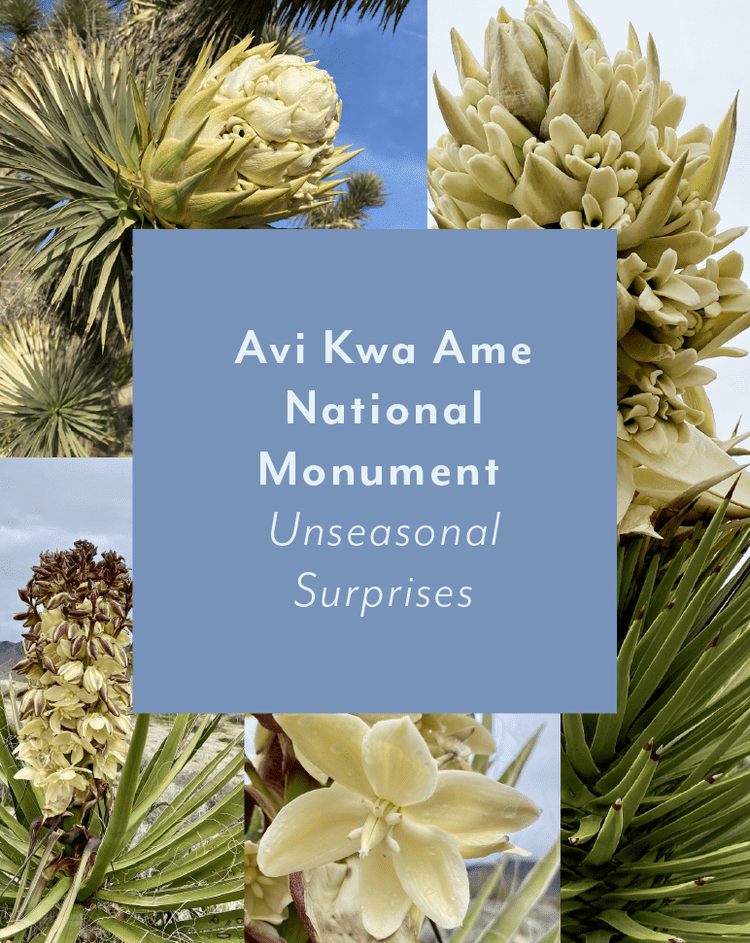
Avi Kwa Ame National Monument ~ Unseasonal Surprises
JANUARY 2026 - Happy New Year to you all! We are off to a great start here in Avi Kwa Ame, and have many exciting updates to share with you. First of all, the monument landscape is really showing off after multiple fall and early winter rains, and lo and behold—some of the Joshua trees are blooming!
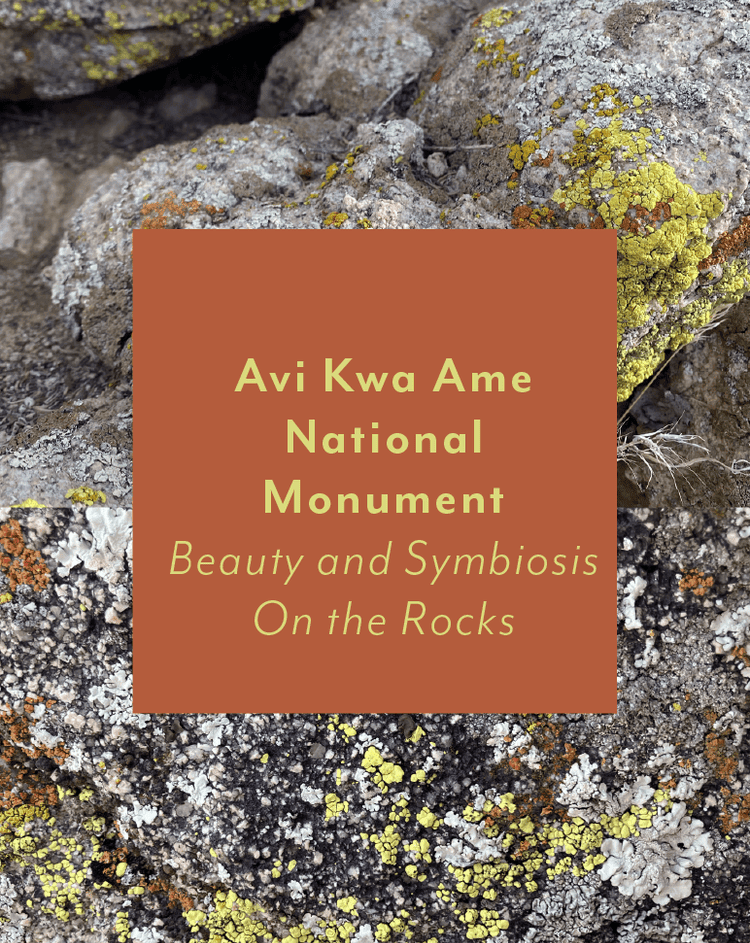
Avi Kwa Ame National Monument ~ Beauty and Symbiosis On the Rocks
DECEMBER 2025 - One of the most striking features of Avi Kwa Ame National Monument might just be the variety and beauty of the lichens you see on the granite boulders found throughout the monument.
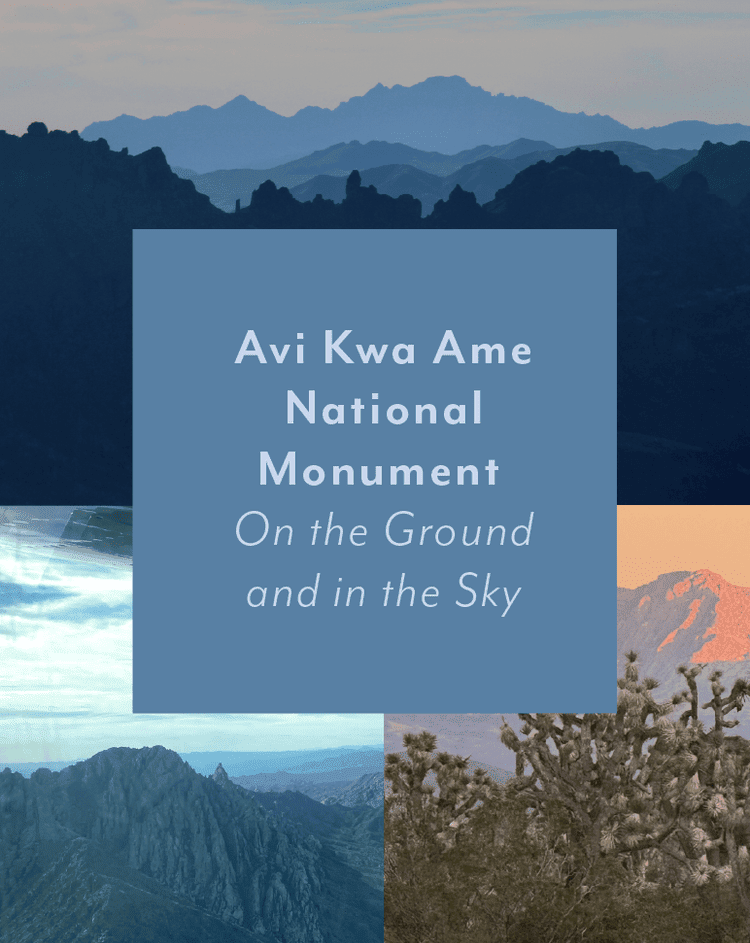
Avi Kwa Ame National Monument ~ On the Ground and in the Sky
NOVEMBER 2025 - Fall is a spectacular time of year in the monument! Thanks to the recent rain, there are more wildflowers in bloom now than there were in the spring, and we’re taking every opportunity to spend time surrounded by the beauty of the desert.
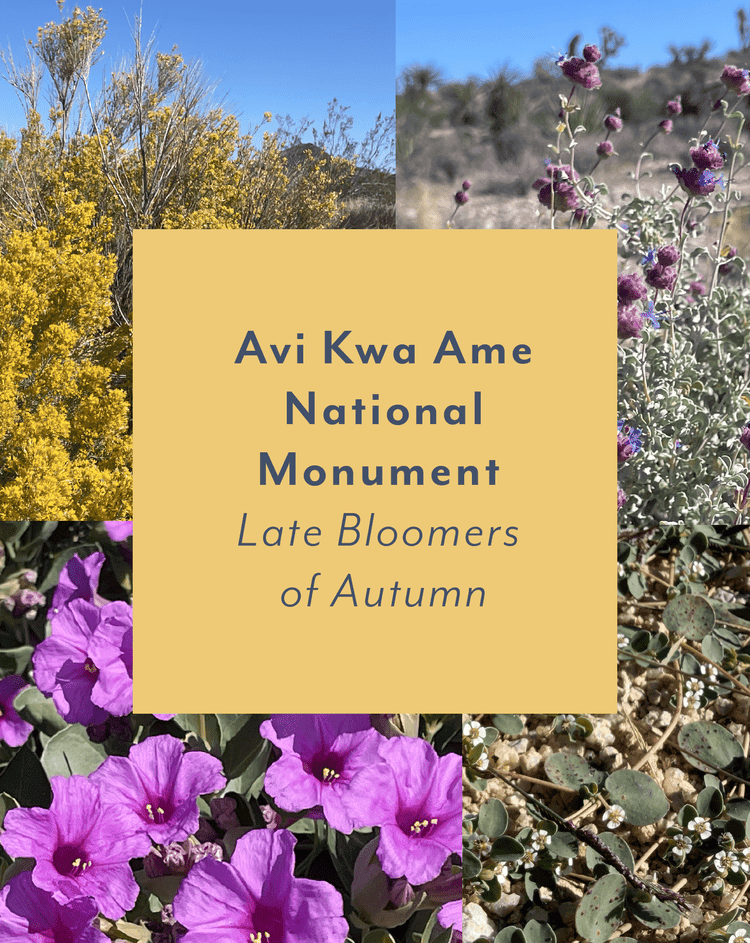
Avi Kwa Ame National Monument ~ Late Bloomers of Autumn
OCTOBER 2025 - October is a beautiful month to visit Avi Kwa Ame National Monument, especially since we've received so much recent rain! The desert is now elegantly dressed in green and golden hues with accents of royal purple.
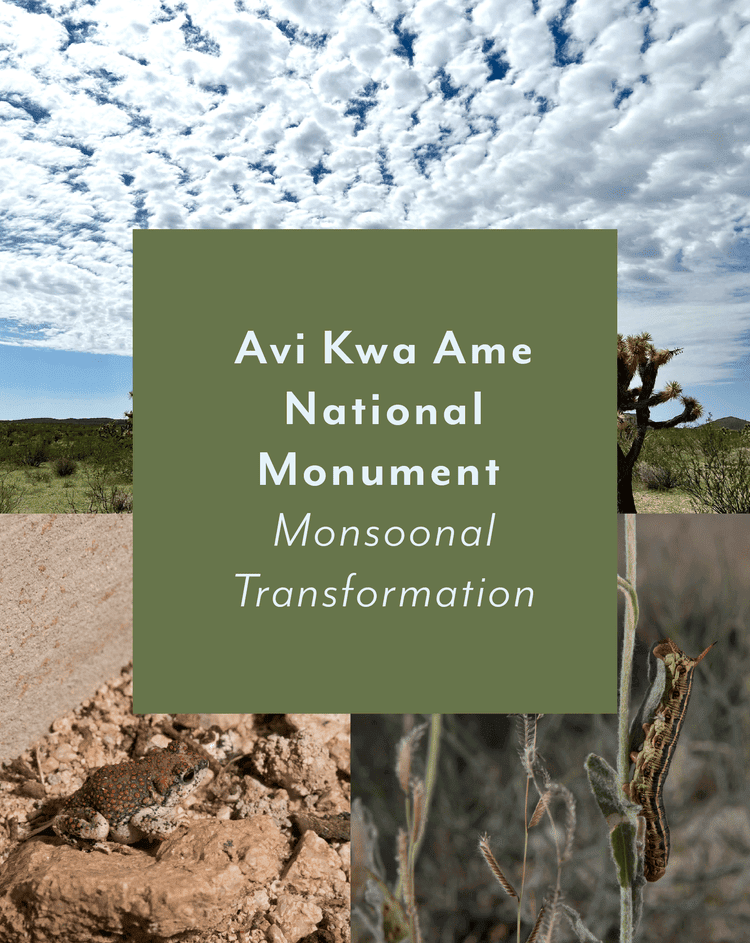
Avi Kwa Ame National Monument ~ Monsoonal Transformation
SEPTEMBER 2025 - Dramatic bursts of monsoonal rain in late August have brought layers of change to Avi Kwa Ame National Monument. Dry arroyos became fast moving creeks, granite tanks (depressions in rock faces) got filled with fresh water, and vernal pools became stages for the most water-dependent forms of desert life.
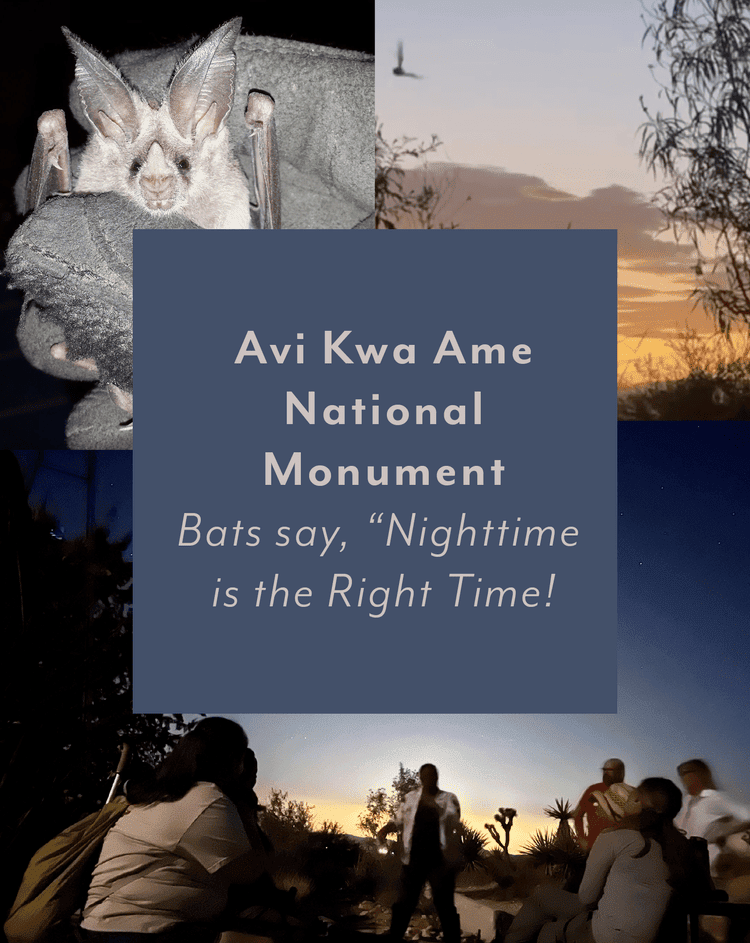
Avi Kwa Ame National Monument ~ Bats say, “Nighttime is the Right Time!”
AUGUST 2025 - During the summer months, resident California leaf-nosed bats form female-only maternity colonies to give birth to their young. By late July, the pups will wean from their mothers and set off on their own, foraging for insects in nearby desert washes.
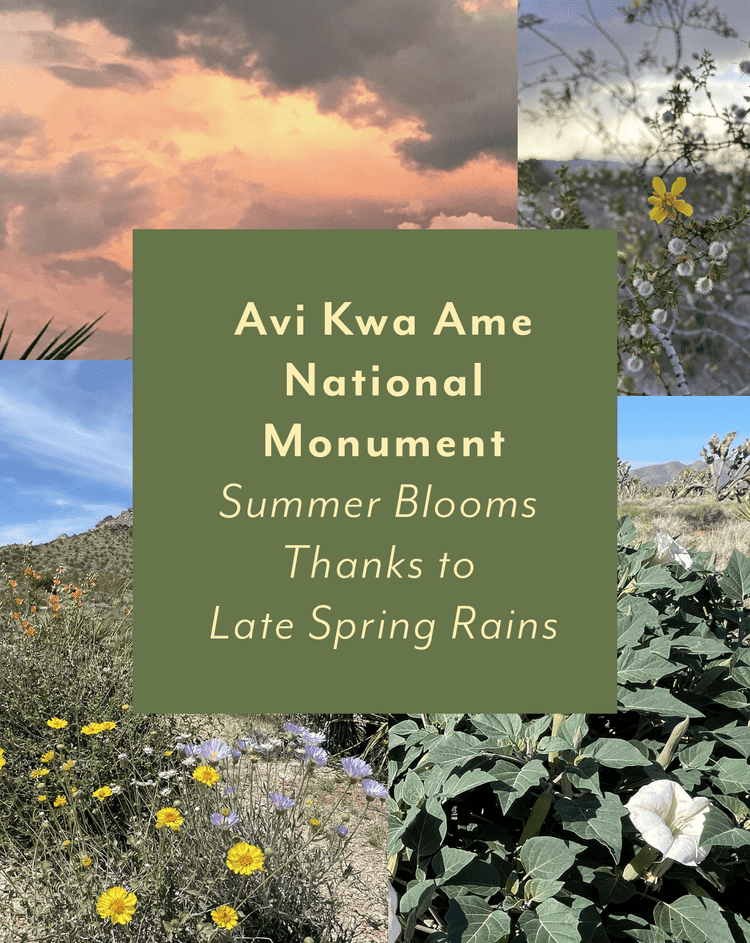
Avi Kwa Ame National Monument ~ Summer Blooms Thanks to Late Spring Rains
JULY 2025 - We are pleased to report that Avi Kwa Ame National Monument and our surrounding areas received 1.22 inches of rain in early June. This is a significant amount, especially during the ongoing Southwest Megadrought, as the usual rainfall for this month is only .06 inches!
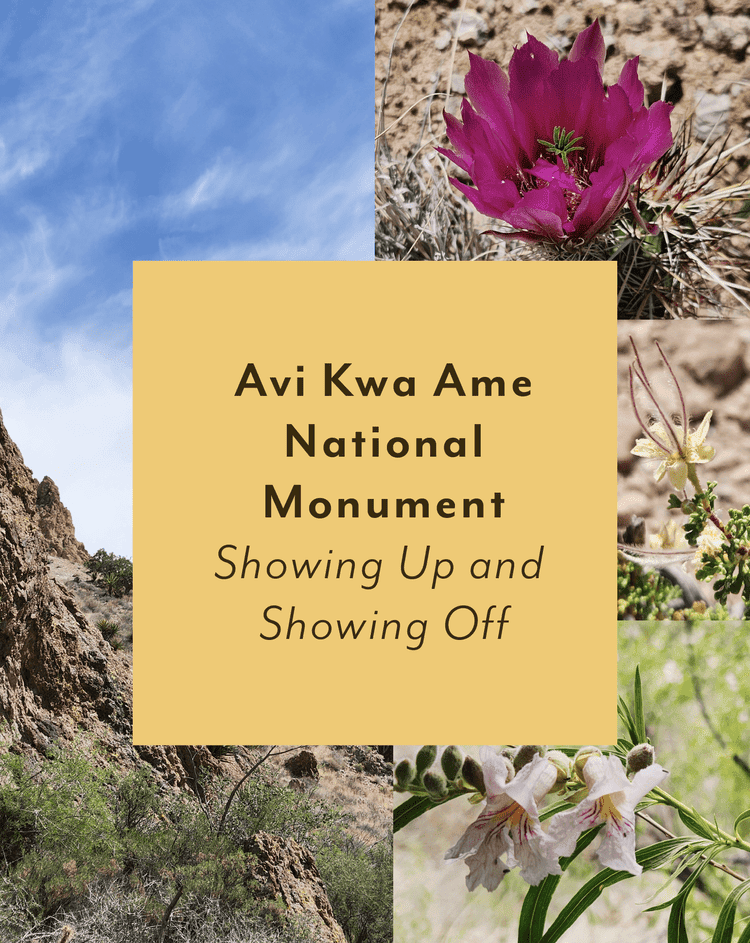
Avi Kwa Ame National Monument ~ Showing Up and Showing Off
JUNE 2025 - The monument was blessed with a bit of rain a few weeks back, and it’s such a treat to see some things blooming!
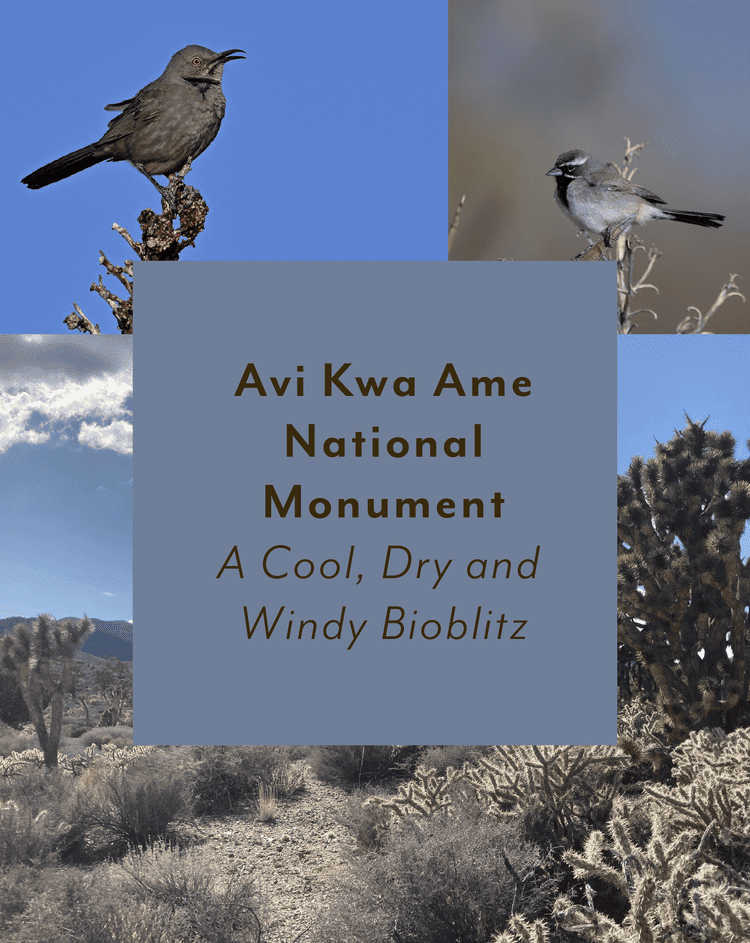
Avi Kwa Ame National Monument ~ A Cool, Dry and Windy Bioblitz
MAY 2025 - This year we celebrated the second anniversary of Avi Kwa Ame with a bioblitz. A phenomenally action-packed weekend of all things biotic, and some abiotic, within the monument.
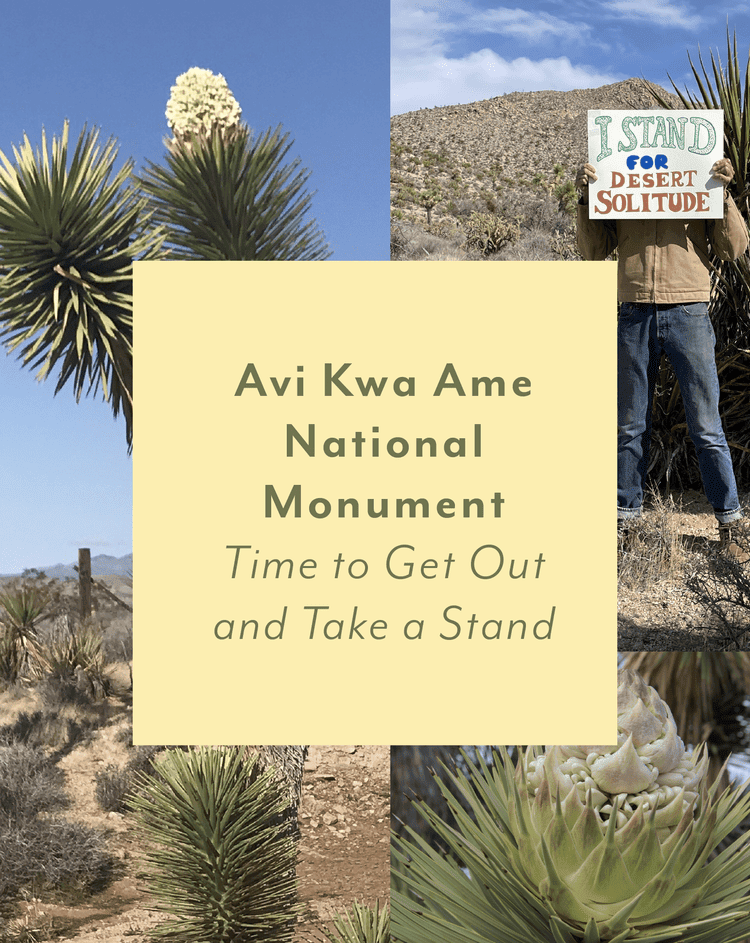
Avi Kwa Ame National Monument ~ Time to Get Out and Take a Stand
MARCH 2025 - Whether solitary or in a flock of your favorite folks, Springtime is the perfect time to get outside and enjoy the monument!
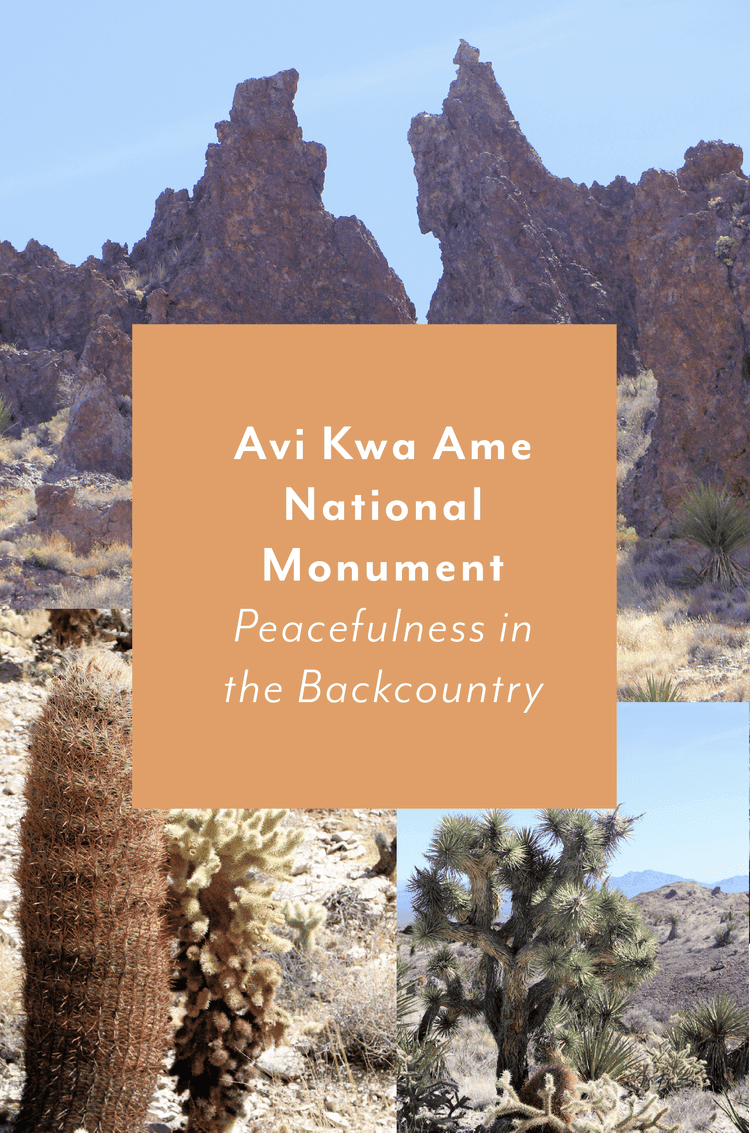
Avi Kwa Ame National Monument ~ Peacefulness in the Backcountry
MARCH 2025 - It is very dry out in the monument right now as the plant and animal life contend with the prolonged drought and very little precipitation. However, despite the strain, there are still some early signs of the desert waking up from winter.
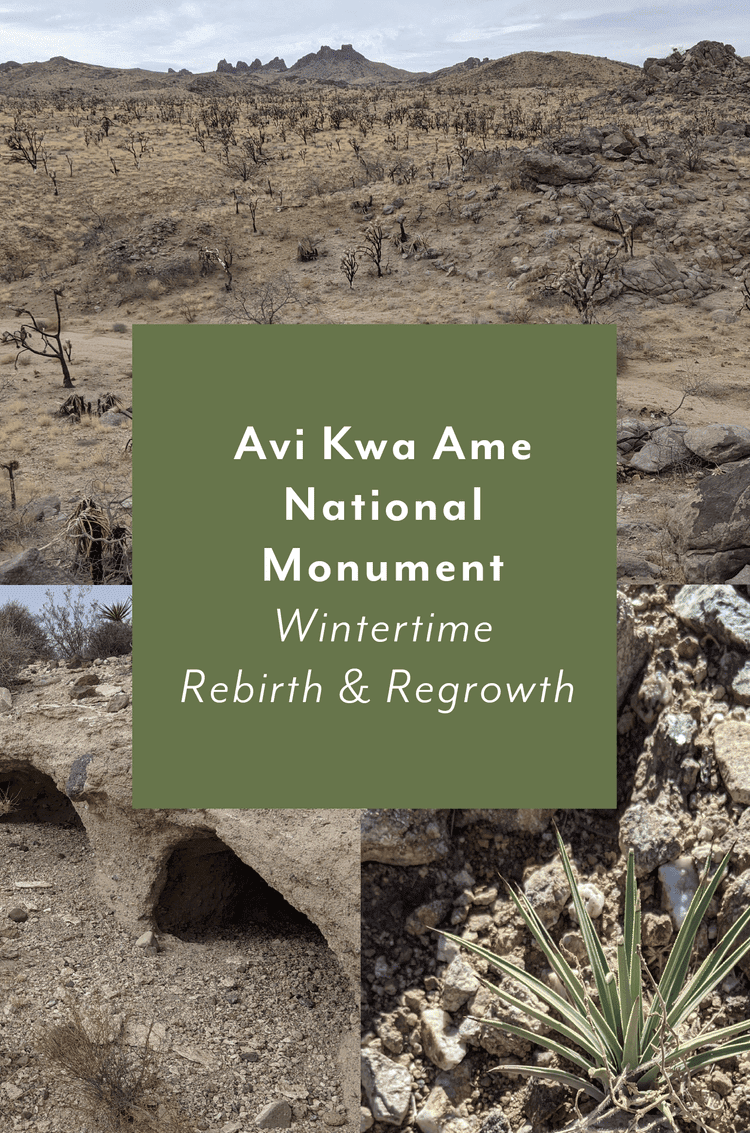
Avi Kwa Ame National Monument ~ Wintertime Rebirth & Regrowth
FEBRUARY 2025 - This is the winter after the fire, and the land feels cold and still and the crisp air nips through collars and pant legs.
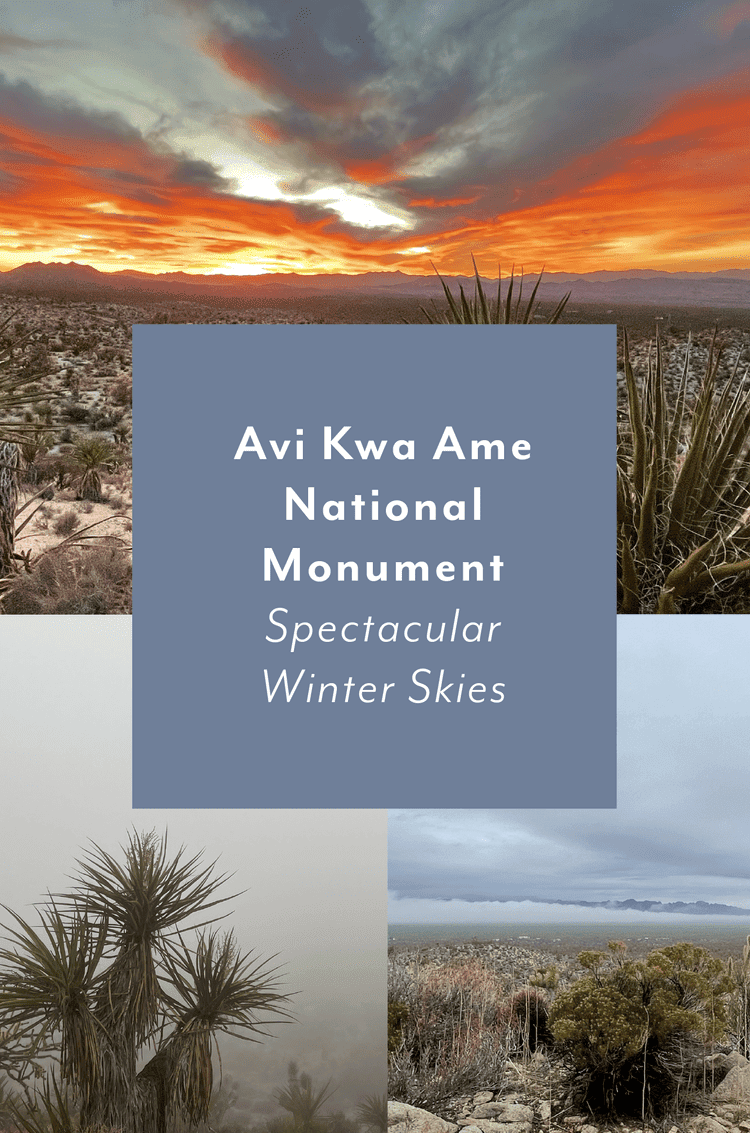
Avi Kwa Ame National Monument ~ Spectacular Winter Skies
JANUARY 2025 - Winter is a beautiful time to look at the sky in Avi Kwa Ame National Monument! Dramatic clouds, vibrant sunsets, wind, and even occasional fog bring wonder and mystery to the Mojave Desert.
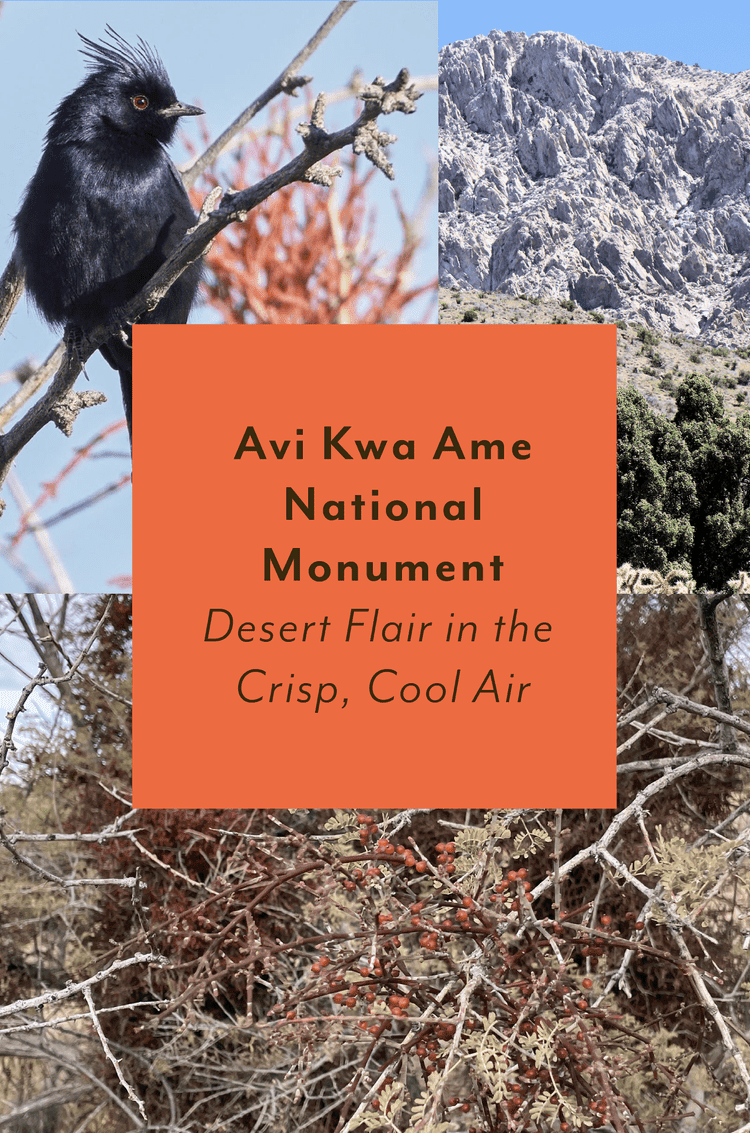
Avi Kwa Ame National Monument ~ Desert Flair in the Crisp, Cool Air
DECEMBER 2024 - Winter is well on its way in Avi Kwa Ame National Monument! The cooler weather and beautiful skies make it a great time to be out and about enjoying the desert scenery.
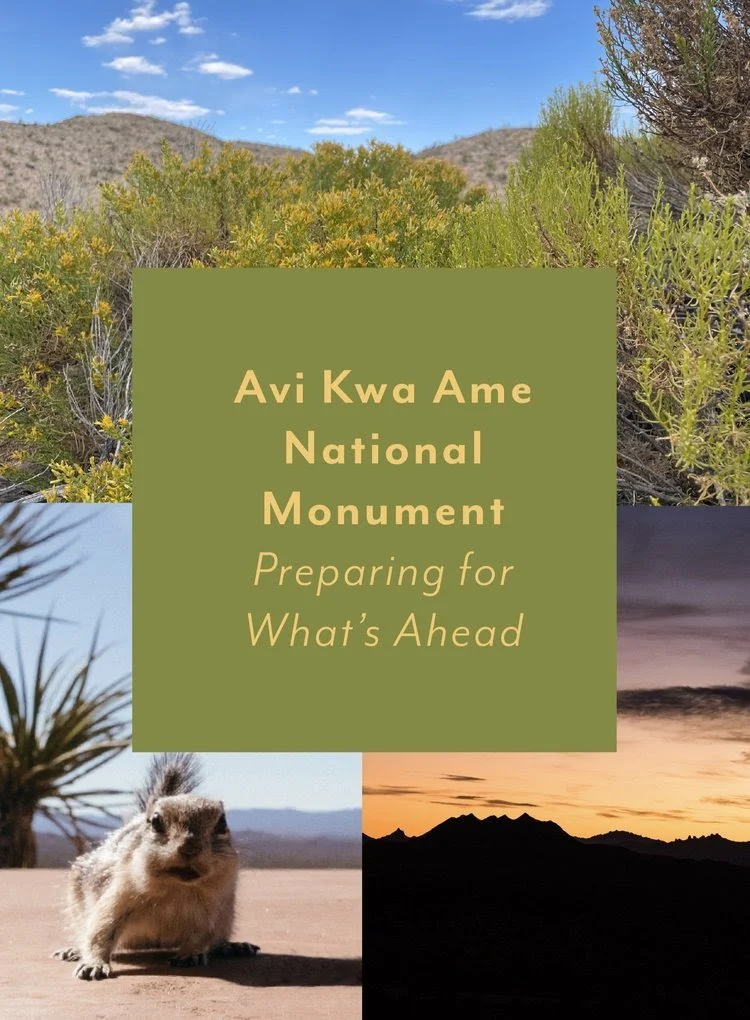
Avi Kwa Ame National Monument ~ Preparing for What’s Ahead
NOVEMBER 2024 - Cooler weather and shorter days are prompting many animals in Avi Kwa Ame to make winter preparations.
