FEBRUARY 2026
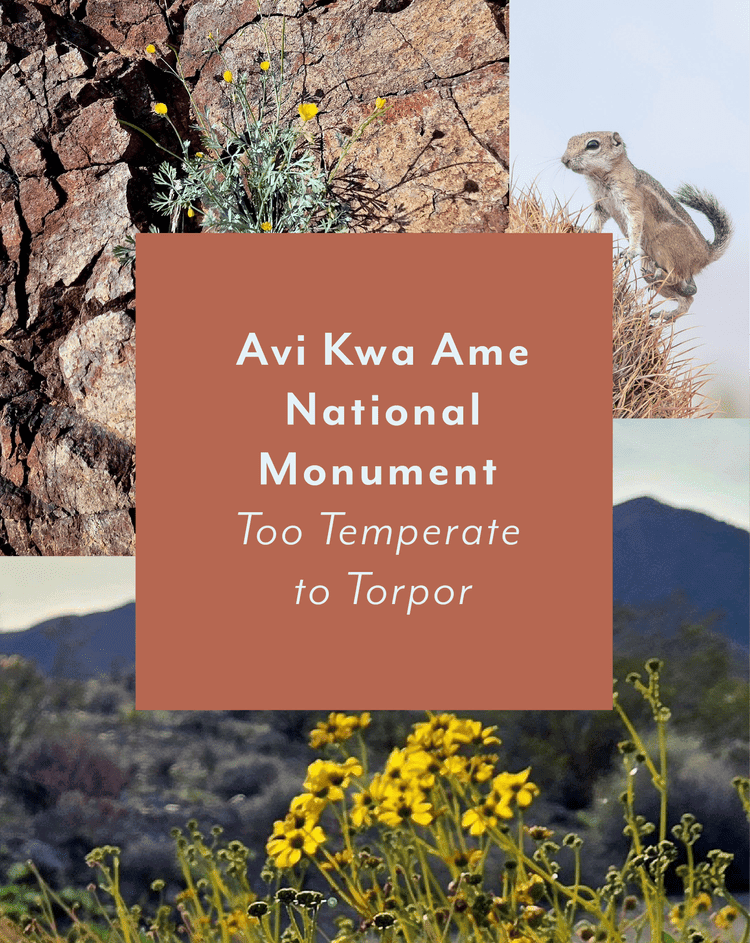
We’re loving on Avi Kwa Ame in the month of February; the Joshua trees are still unseasonably blooming and even more buds are showing, while green grasses and tiny wildflowers are sprouting in the shade, and new life is emerging everywhere from the recent rains and mild temperatures. What a glorious time to get out and explore! It is warm enough that you may see white-tailed antelope squirrels rooting around for seeds and rushing from place to place. These antelope squirrels do not have antlers—they are named for their little white behinds that resemble antelope rumps, and as they quickly bound away, you’ll see a lot of those backsides. Antelope squirrels spend all year gathering food and storing it in their underground burrows, keeping extensive larders for winter use when resources are usually scarce.
To withstand the cold and conserve energy, white-tailed antelope squirrels (as well as some kangaroo rats and pack rats) can will themselves into a hibernation-like state called torpor, in which they slow down all their metabolic processes. Unlike true hibernation, a torpor state can last as little as hours or a day, instead of a whole season. Biologist and UNLV professor Sean Neiswenter has been collecting ground squirrels and rats from the Mystery Ranch as part of a NASA-funded study to investigate how these animals are so successful at shutting down and restarting their bodily processes. Understanding more about this could lead to advances in medical science and even enhance our ability to travel longer distances in space.