Bottom left: Ilene Thompson. All others Paula Jacoby-Garrett.
JUNE 2026
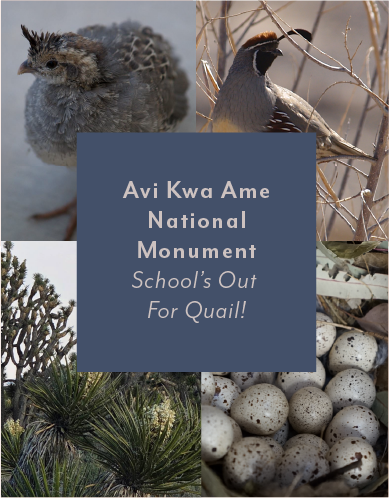
School’s out for quail! Their breeding season, which started in March, is wrapping up now in the month of June. Gambel’s quail are a special species local to Southern Nevada, as well as most of Arizona and parts of our adjacent states. They roost in dense brush and shrubs, and you’ll find them sitting in catclaw, yucca, and Joshua trees around the monument. They eat mostly plants (seeds and leaves of grasses, wildflowers and perennials) and cactus fruit is one of their favorite delicacies. They also eat insects, and even small lizards and rodents when available, especially when raising young. In fact, quail chicks will only eat animal meat that their parents bring them for their first few days after hatching, including beetles, worms, caterpillars and grasshoppers. As they develop, they will gradually learn to eat more plants.
Quail build their nests in foliage on the ground, and can lay as many as 15 cinnamon-speckled eggs (wow!) that need 3-4 weeks to incubate. Once hatched, the young quail are on the move almost immediately with their family group, which can include one pair of adults and up to 16 children. Chicks follow their parents closely and gather together under their fluffed-out feathers to keep warm, as they cannot regulate their body temperatures. It will take about 3 months (sometime in July) for the chicks to become fully independent, and even then, they will spend most of their lives roosting and foraging in large, social, chatty groups and following each other around in lines. Keep an eye out for this season’s new families near our springs, seeps, guzzlers, and washes, as these birds love any opportunity for a drink of water, although they are well-adapted to getting moisture through foraging.