Avi Kwa Ame National Monument ~ Bats say, “Nighttime is the Right Time!”
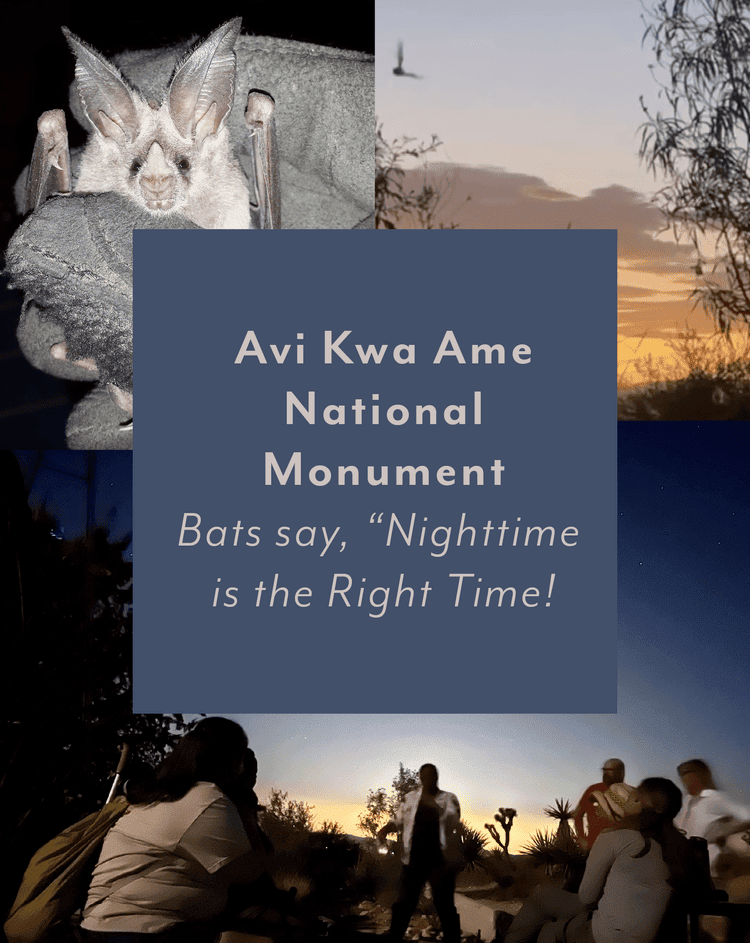
Photo credit clockwise from bottom: Sonya Wilson, Jeff Hill, Kim Garrison Means.
AUGUST 2025
Our last First Saturday event at the Mystery Ranch was all about nighttime creatures, and nature delivered! This month’s seasonal update is from wildlife biologist Jeff Hill, one of the specialists that co-led the event.
During the summer months, resident California leaf-nosed bats form female-only maternity colonies to give birth to their young. By late July, the pups will wean from their mothers and set off on their own, foraging for insects in nearby desert washes.
With their long life-span (some banded bats have been contacted almost 30 years later!), small litter size of 1-2 young, and high parental investment, these bats are much closer in their life history strategy to humans than other small mammals.
Avi Kwa Ame National Monument lies at the very northern extreme of the species range, and as the heat of summer transitions to the cool nights of fall and winter, the bats will begin seeking geothermally heated mines and caves for shelter. These geographic features are critical to sustaining non-migratory bat species through the cold of the high desert winters, and highlight the importance of bat-compatible mine gating.
The Mojave Desert is an environment of extremes, and the species that inhabit this land exhibit some truly remarkable adaptations.