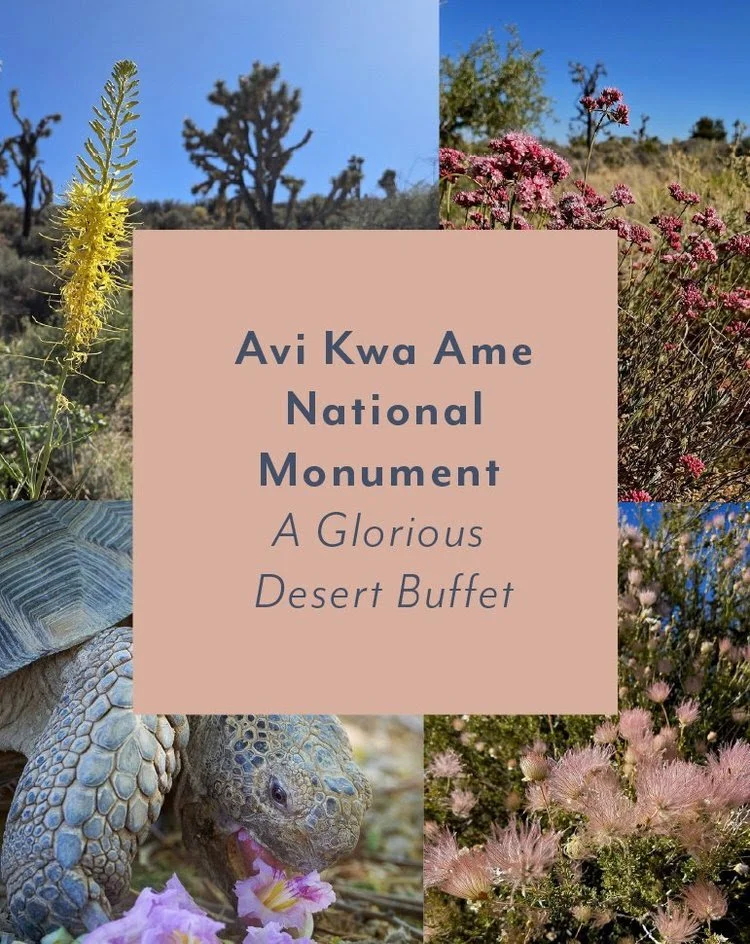
Top two and bottom right: Ilene Thompson. Photograph of tortoise eating desert willow flowers by David Anderson
MAY 2026
The winds are blowing our way in Avi Kwa Ame this spring, as our plants and animals continue to thrive due to this and last year’s rainfall. Late April and May bring bright, orange blooms to our cholla cactus, and fuzzy white seedballs on the creosote bushes that glow in the afternoon light. Like many plants and animals, creosote is adapted to the winds that assert themselves this time of year. It’s seedballs catch on the breeze and travel for miles, ensuring that new generations of plants have a chance to grow.
One of our iconic animals, the desert tortoise, is also on the move this time of year. As the weather has warmed, flowers are still in bloom, and grass and foliage are abundant. Tortoises are out and about, foraging, socializing, looking for mates and digging nests, where they will lay eggs in late May and early June.
Though they may spend up to 95% of their lives underground, mornings and early evenings are good times to look for tortoises this time of year, and if you are lucky, you may spot one traveling down a wash, canyon, or in the rocky foothills. Do take it slow when you are driving the backroads and keep a look out for this threatened species.
You’ll also see some of the tortoises’ favorite plants in bloom around now – apricot mallow, brittlebush, dandelions, as well as desert grasses and cactus flowers. They have been known to feed on over 200 plant species, so they really aren’t all that picky!