DRIVE:
SPIRIT MOUNTAIN OVERLOOK BACKCOUNTRY DRIVE
Road Type: One lane backcountry road.
Total Length: Out and back; 1.7 miles each way, 3.4 miles round trip.
Road Surface: Mostly sandy and some gravel.
Vehicle Type: A high clearance vehicle is recommended but four-wheel drive not needed.
Difficulty: Easy
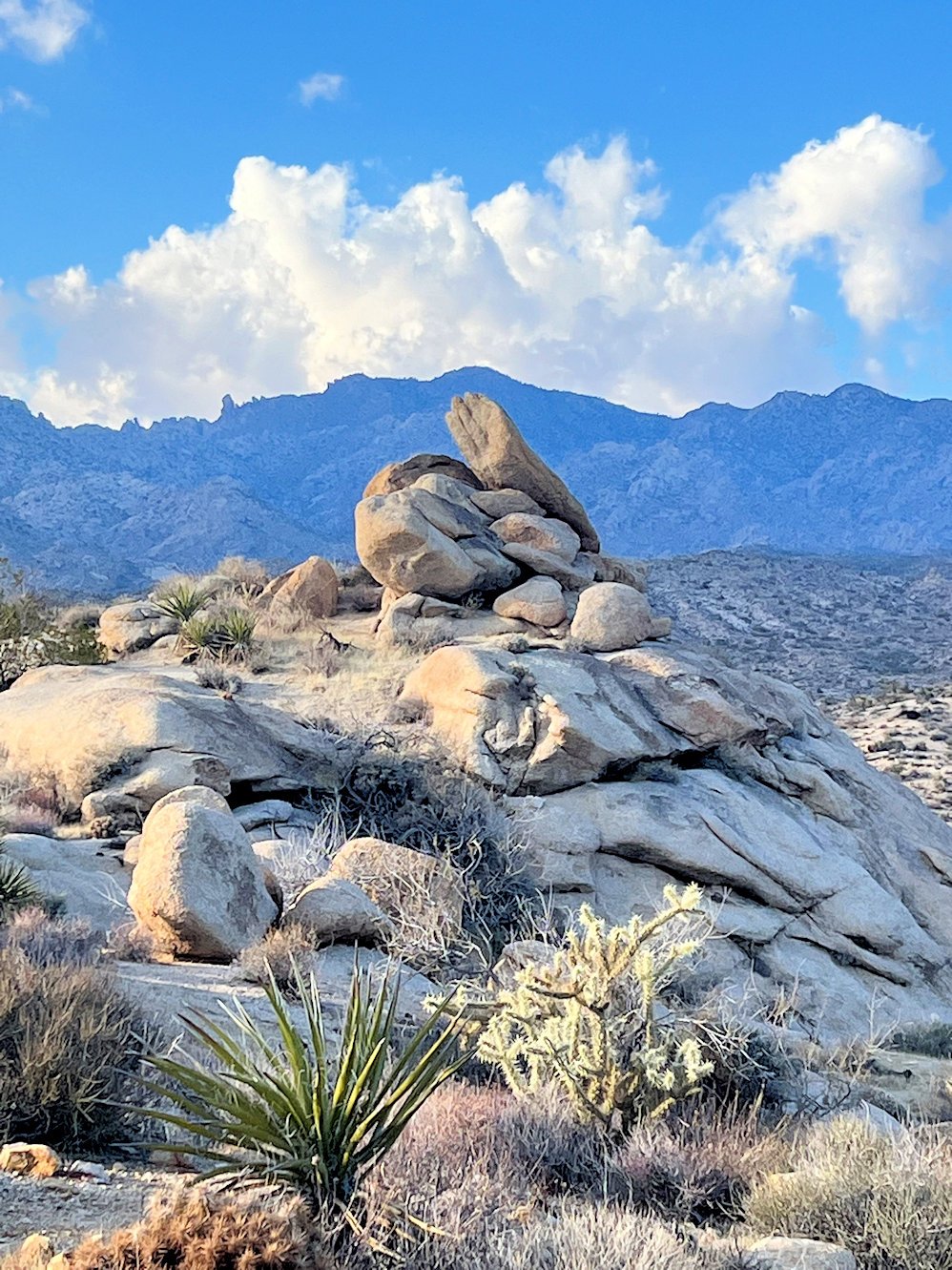
Photos by Alan O’Neill.
OVERVIEW
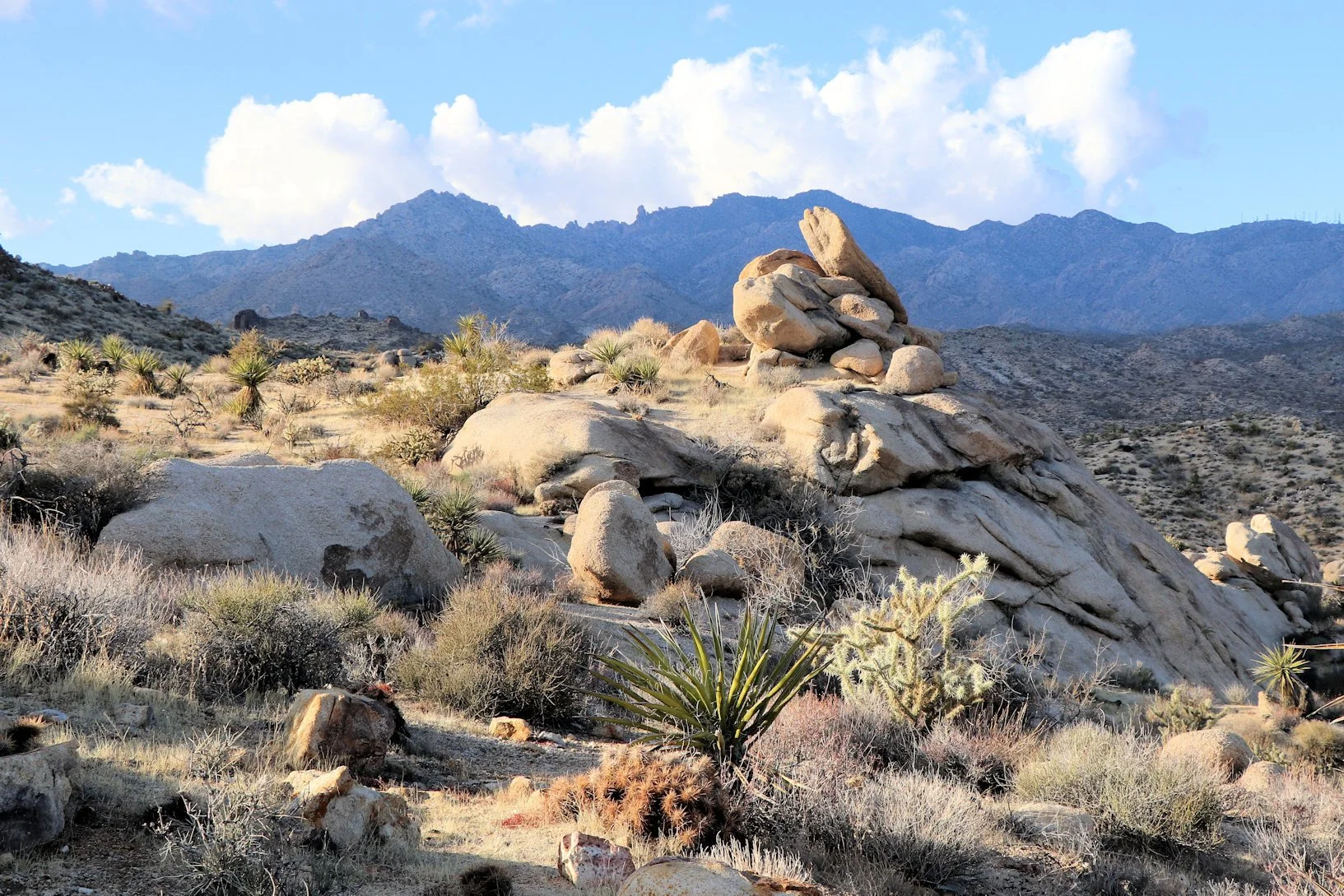
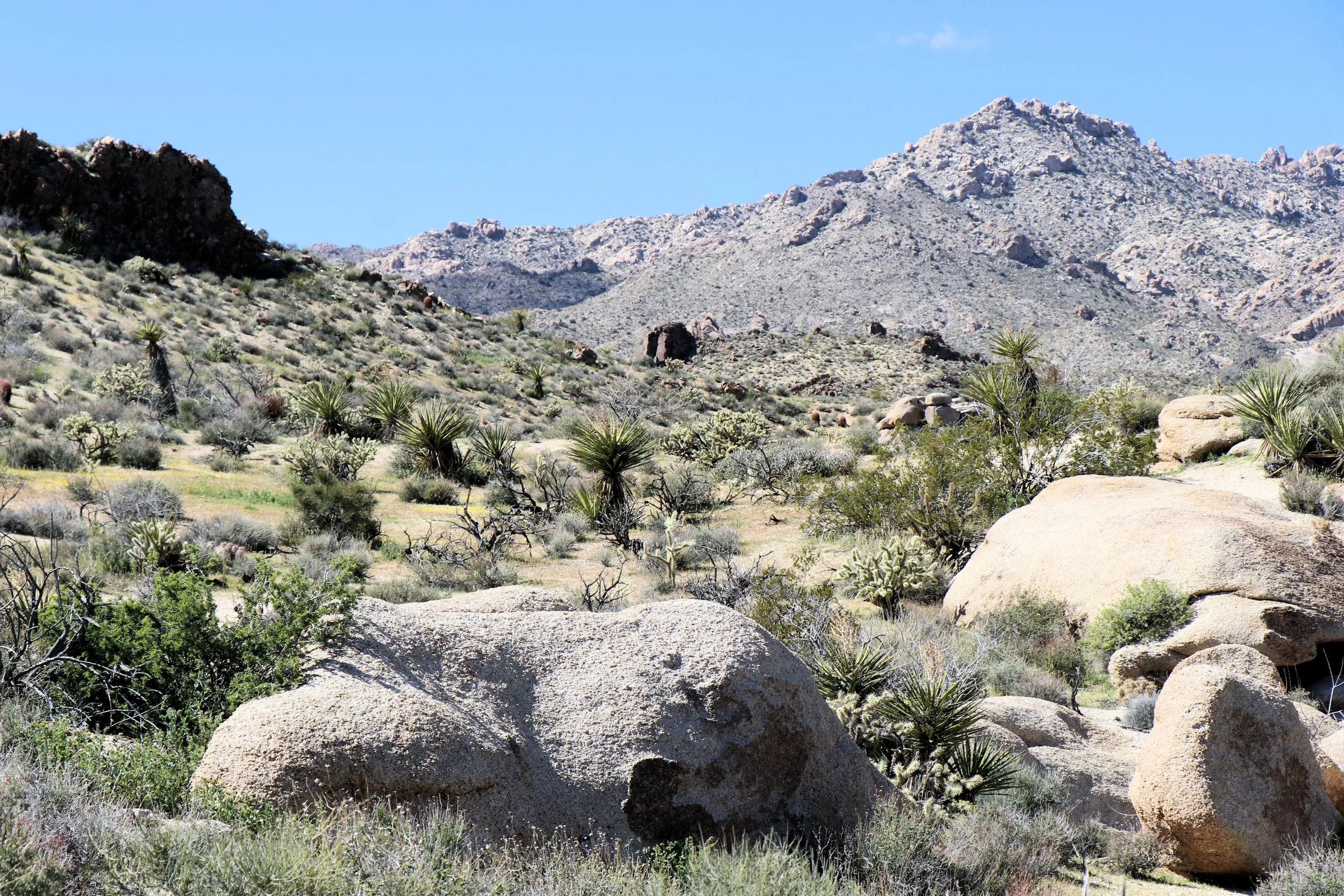
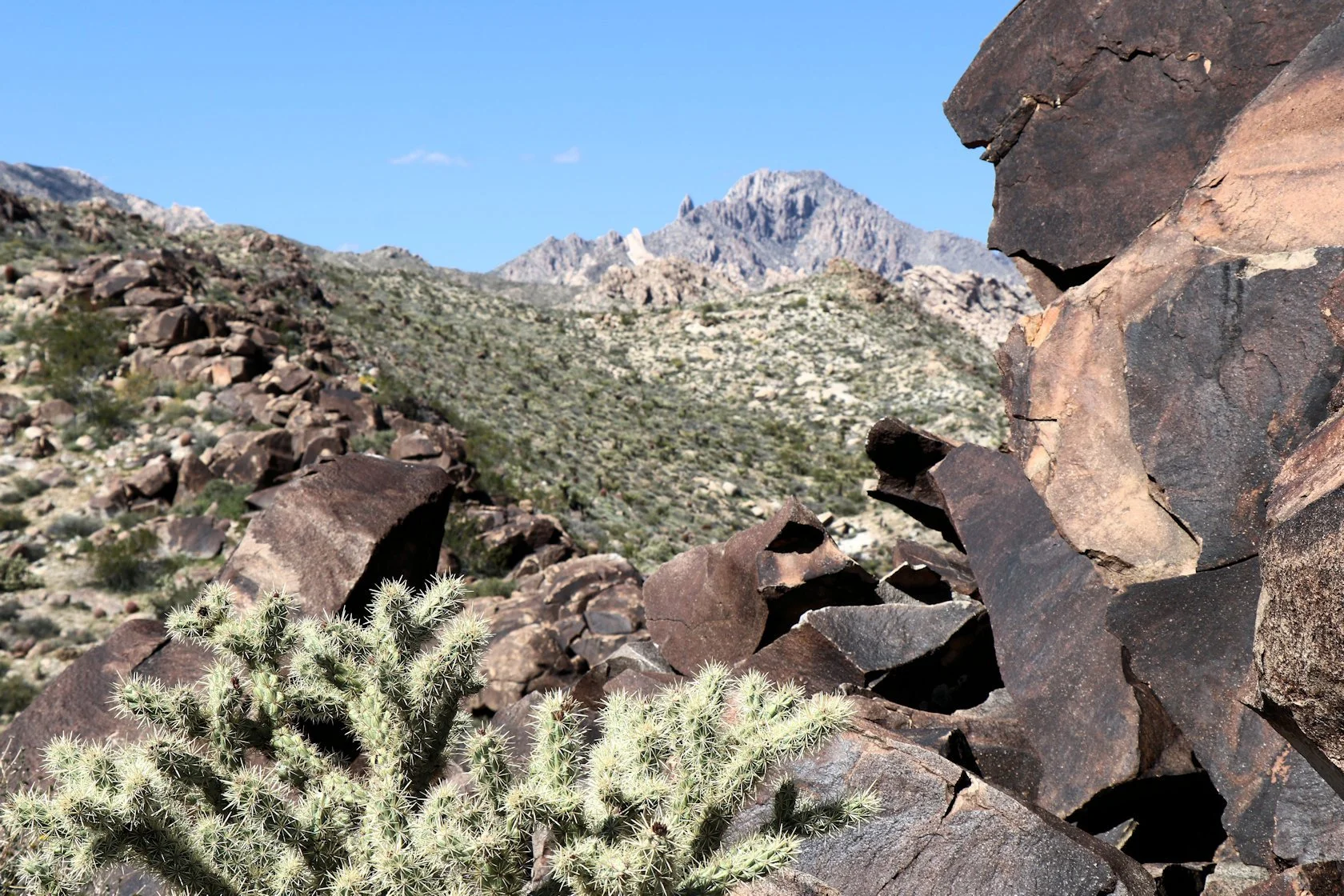
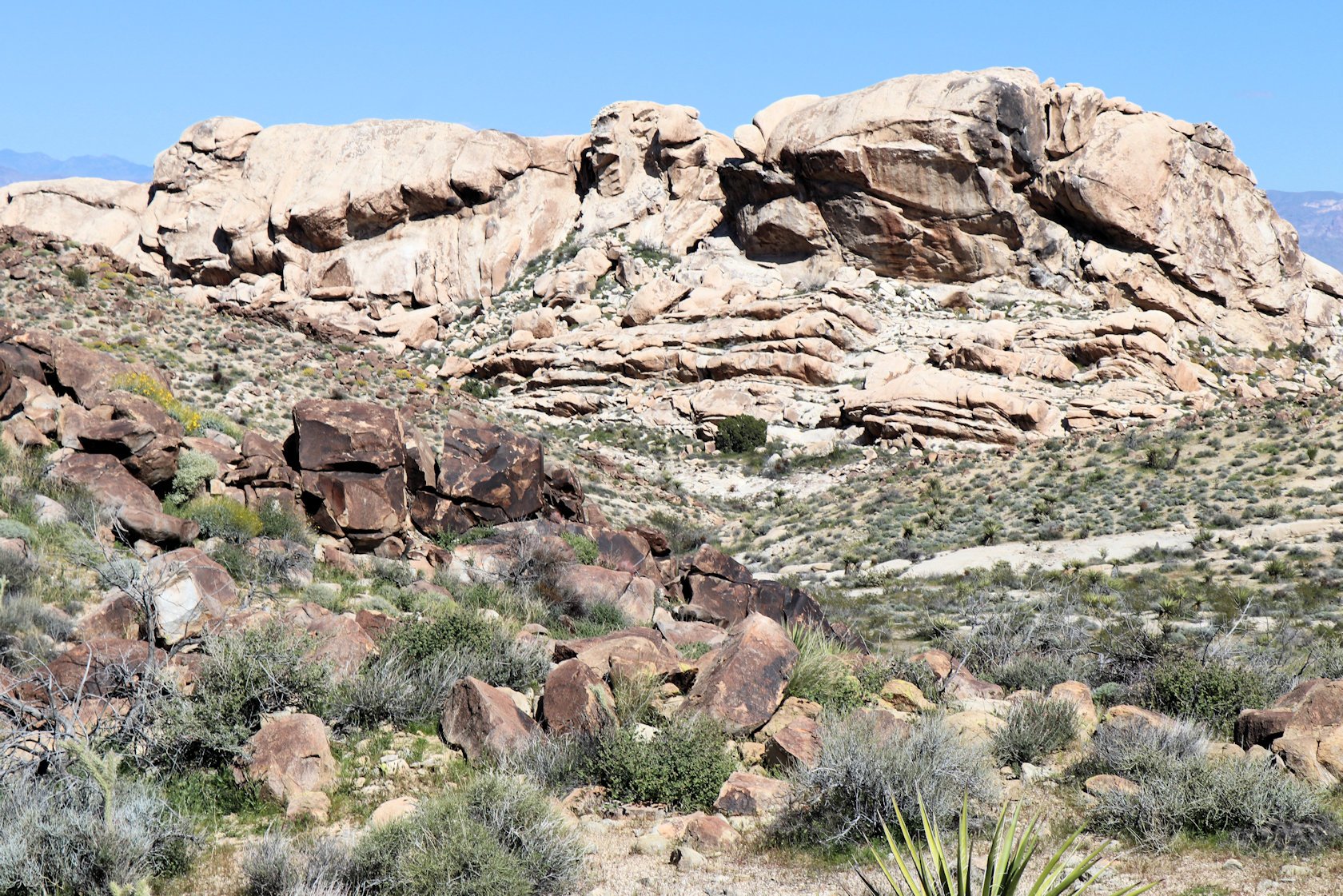
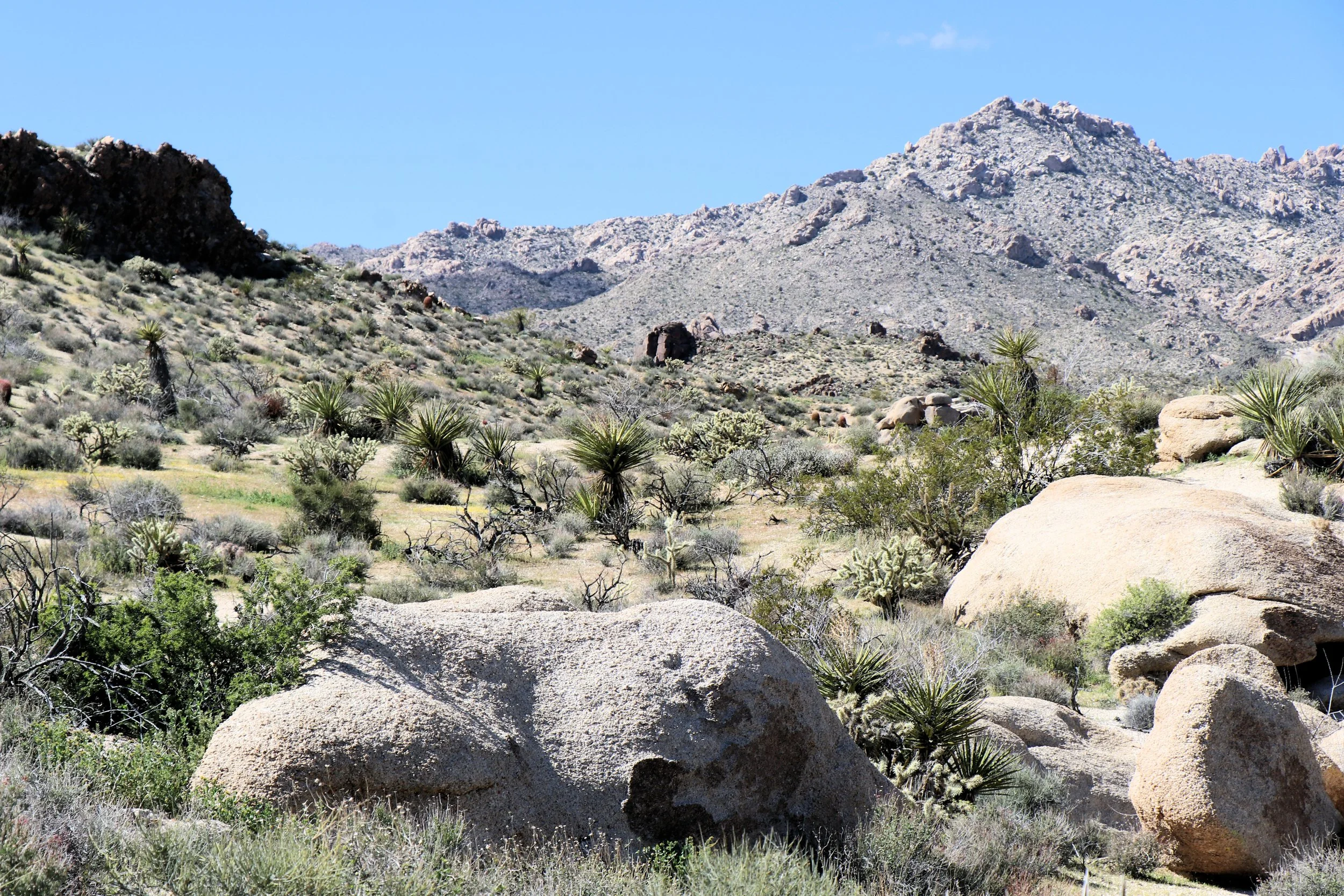
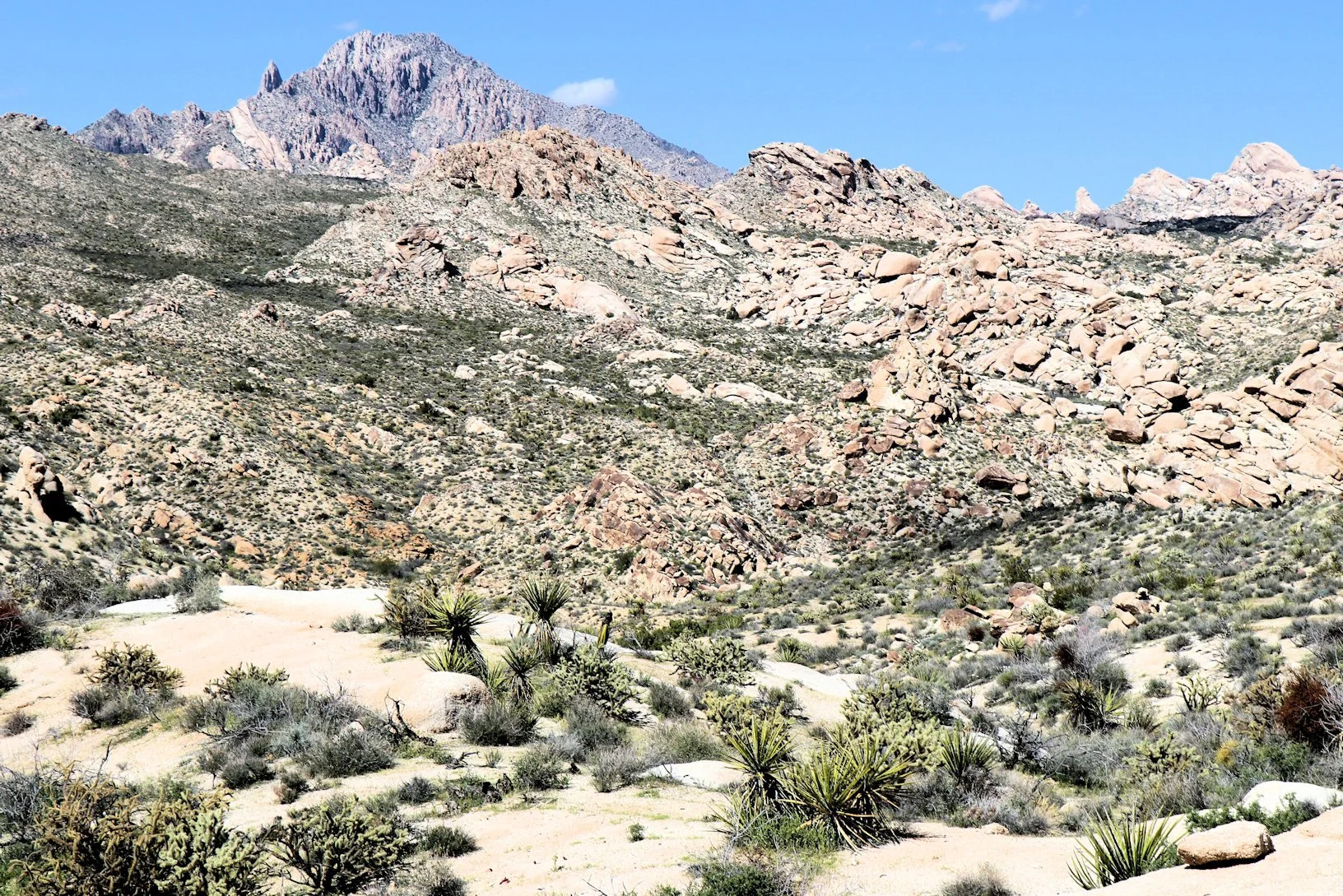
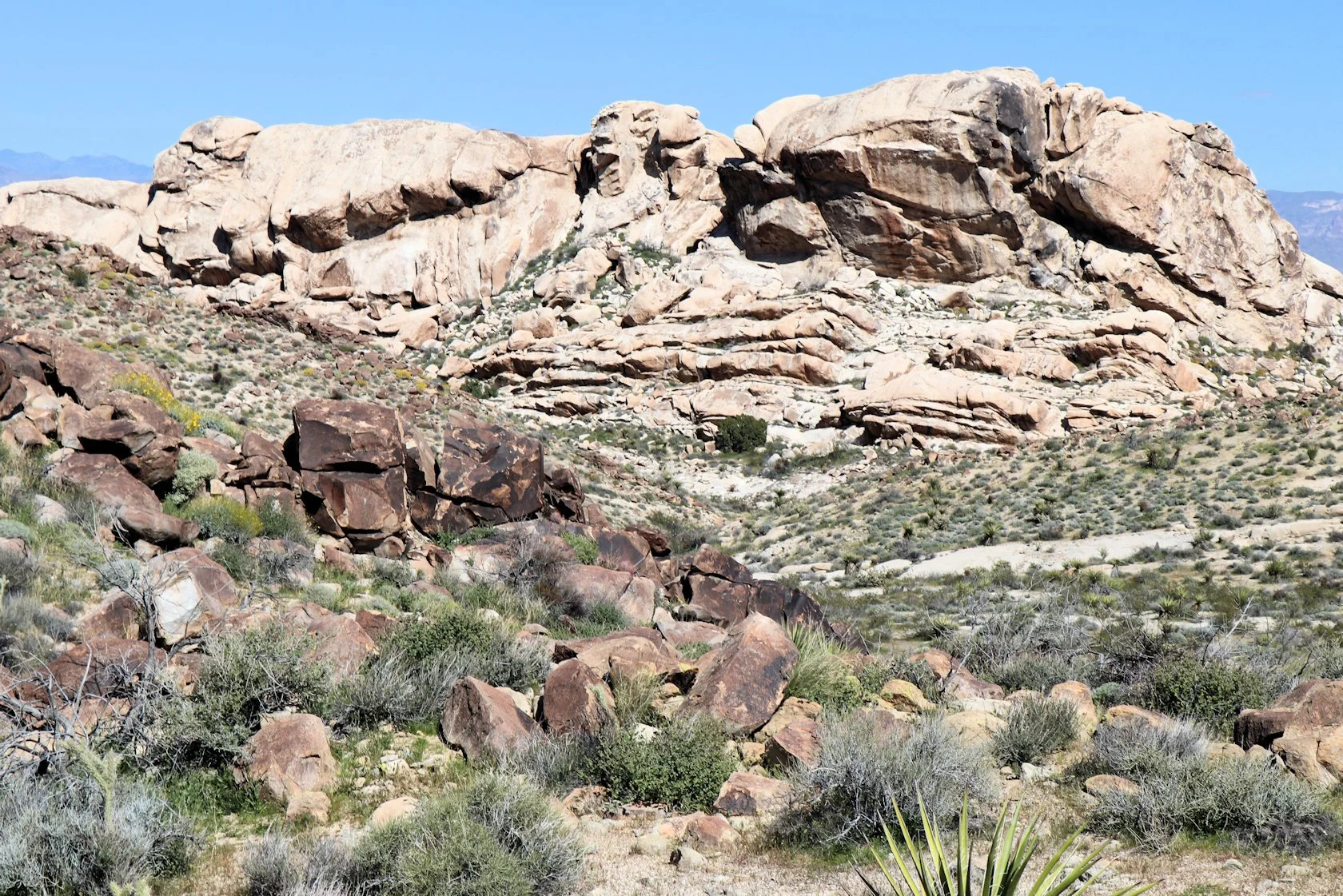
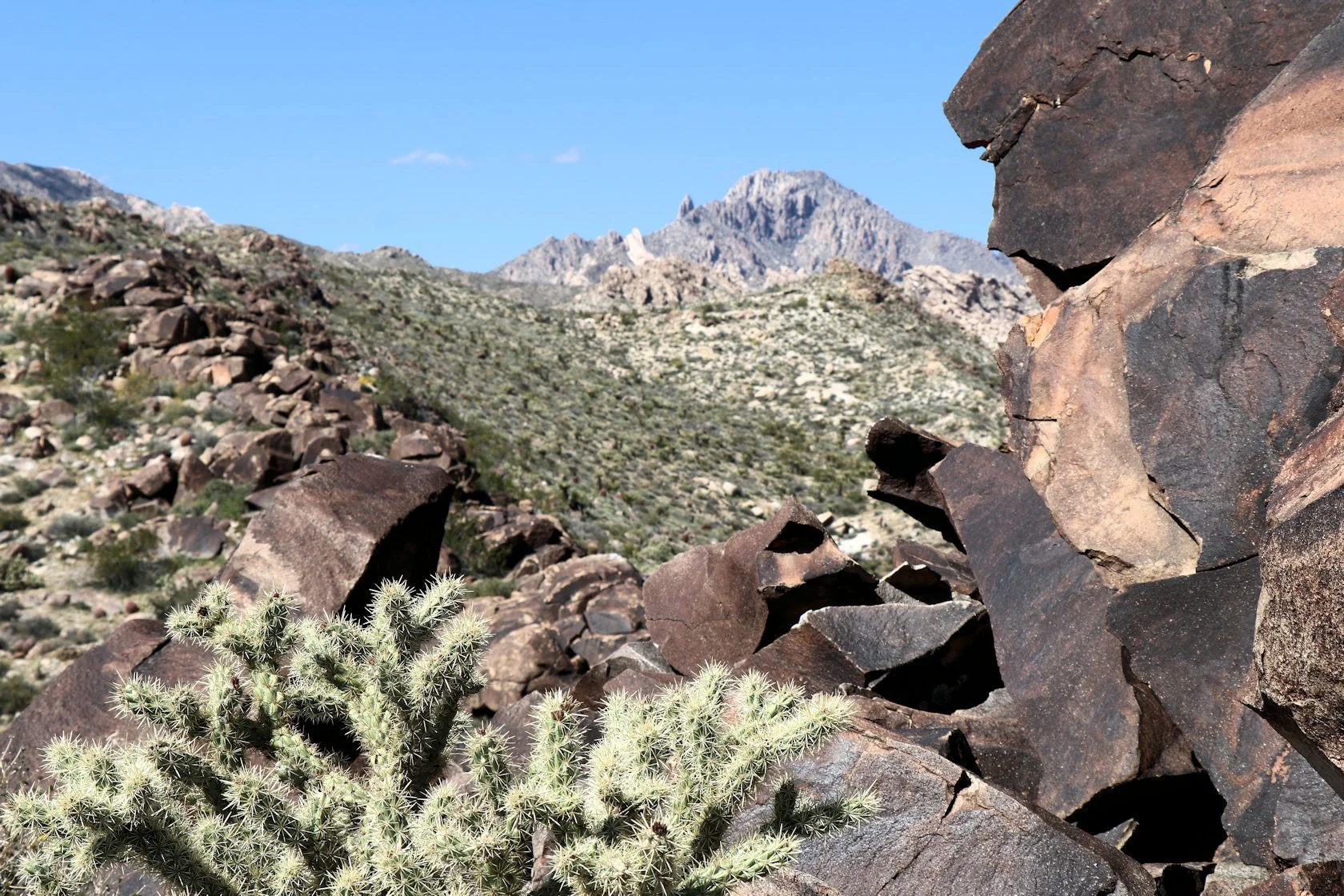
This drive is only 1.7 miles one way but leads to an overlook with, perhaps, the most stunning view of Spirit Mountain (Avi Kwa Ame). You are looking at the south face of Spirit Mountain with the rugged granitic landscape of the Bridge Canyon Wilderness Area in the foreground. The Wilderness Area, 7,761 acres in size, is part of the Avi Kwa Ame National Monument. Sculpted granite rock formations rise impressively from the landscape, which is home to a cross-section of Sonoran, Mojave and Great Basin plant communities. From the overlook, you can also look south and see the Dead Mountains, also an important sacred landscape for the local tribes.
KNOW BEFORE YOU GO:
Should you decide to travel this route, you do so at your own risk. Always take the appropriate precautions when planning and traveling, including checking the current local weather, trail/road conditions, and land/road closures. Carry the appropriate safety, recovery, and navigational equipment and obey all public and private land use restrictions and BLM Monument rules. Carry a full-size spare tire and tire patch/plug kit—and know how to use it before you need to. Be prepared for spotty cell phone service or even no service. Bring more water and food than you think you’ll need in case of any emergencies.
This region is sacred to Native American peoples. Please respect it as you would your own place of worship. Please do not touch, alter or destroy any archaeological resources. They are protected by law and irreplaceable. Once they're gone, they're gone forever.
DIRECTIONS:
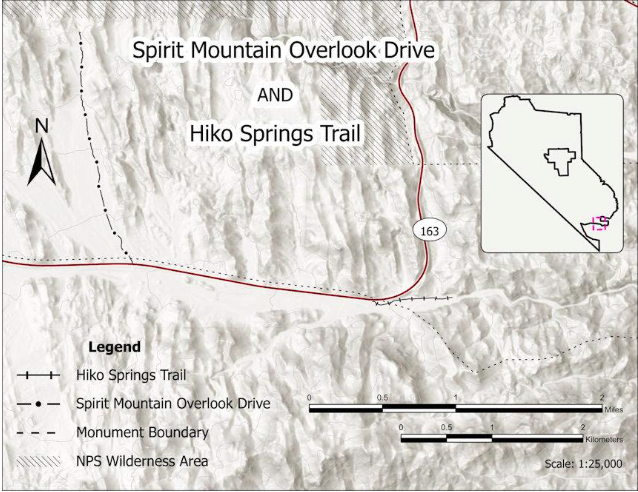
From Las Vegas, you head south on I-11 (U.S. 95 south) towards Boulder City. At the junction of I-11 and U.S.95, turn south on U.S 95 toward Searchlight and Laughlin. You then turn left (east) on Nevada Highway 163 (Laughlin Hwy). After driving 8 miles on Highway 163, there is a fairly open area on the right where a lot of people go four wheeling. On the left, just across from the large open area is a backcountry dirt road that goes about a mile and ends at the overlook.
ABOUT THE ROUTE:
The drive starts on Nevada Highway #163, 8 miles south from its intersection with U.S. 95. There is a fairly open area on the south side of #163 where a lot of people go four- wheeling. Just across the highway from this large open area is a backcountry dirt road that goes 1.7 miles and ends at the overlook. The route is sandy and gravelly, but not rocky.
Rising to an elevation of 5,639 feet above sea level, the granitic Spirit Mountain and the surrounding landscape as seen from the overlook are sacred grounds for the 10 Yuman tribes of the lower Colorado River, as well as the Hopi and Southern Paiute. For the Yuman tribes (often referred to as the River Tribes), the area is tied to their creation, cosmology, and well-being. The mountain plays a prominent role in the religion and mythology of these people. They believe the mountain (called Avi Kwa Ame) is the spiritual birthplace of the tribes.
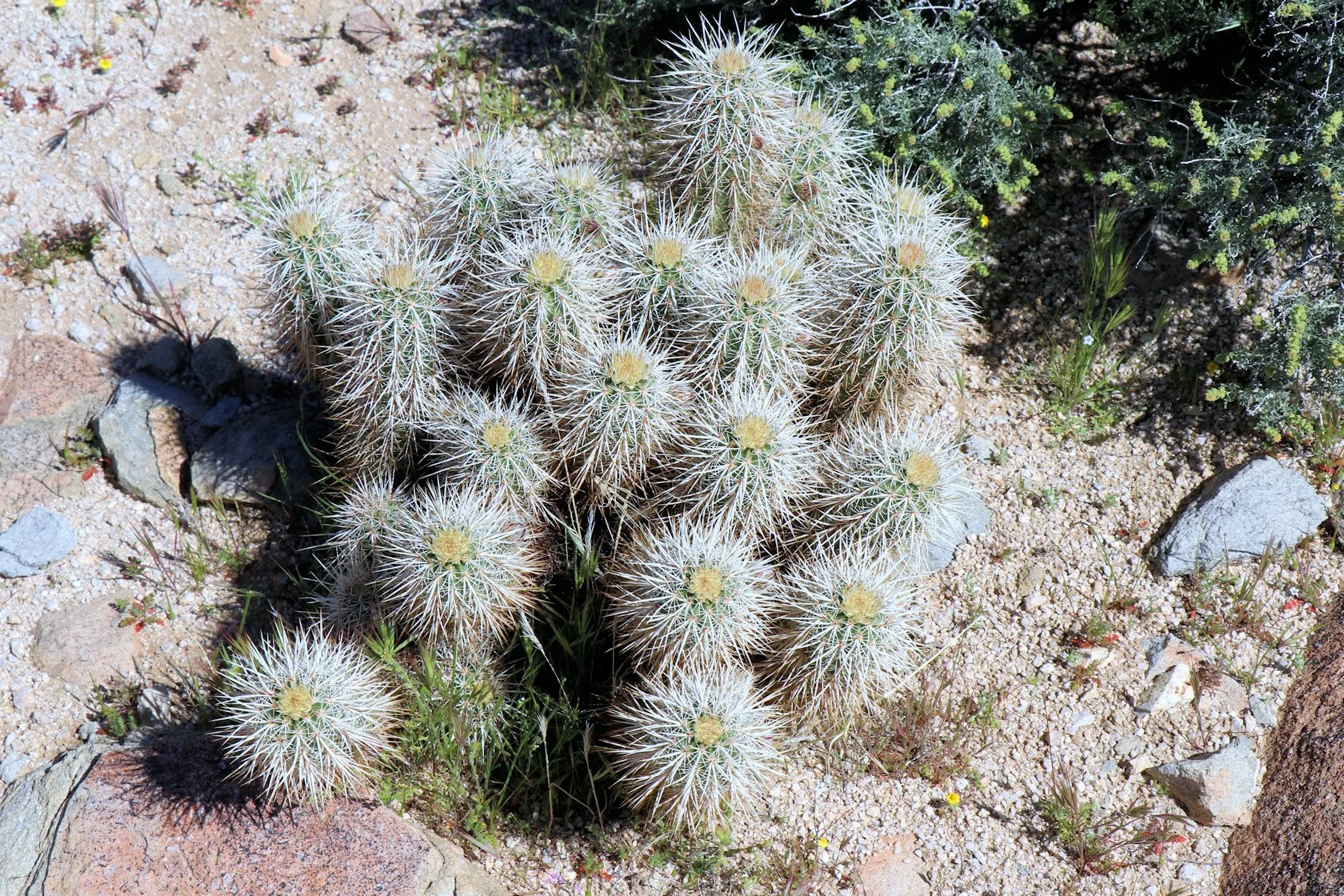
Along the route, you see mostly creosote, bursage, catclaw, yucca, and several species of cacti. Mammals include desert bighorn sheep, mule deer, cactus mouse, canyon mouse, desert wood rat, red-tailed hawk, golden eagle, peregrine falcon, cactus wren, Costa's hummingbird, Crissal thrasher and Bell's vireo.
Reptiles include western chuckwalla, fence lizard, Great Basin gopher snake, leopard lizard, southwestern speckled rattlesnake, large spotted leopard lizard, Great Basin whiptail, desert iguana, zebra-tailed lizard, yellow-backed spiny lizard, Great Basin collared lizard, Mojave rattlesnake, desert banded gecko, Mojave shovel-nosed snake and red coachwhip. The desert tortoise also finds critical habitat here. Sensitive species include the California leaf-nosed bat, banded Gila monster, Townsend's big-eared bat, and Yuma myotis.